From The Neolithic To The Sea: A Journey From The Past To The Present
Southwell
Statistics
Category
County
Coordinates
Grid
Condition
Age
Admission
County
Coordinates
Grid
Condition
Age
Admission
Urban
Nottinghamshire
53°04'40.8"N 0°57'18.0"W
SK6999653962
-
Roman
-
Nottinghamshire
53°04'40.8"N 0°57'18.0"W
SK6999653962
-
Roman
-
Map
- History
- Gallery
- Gallery
- Gallery
- Gallery
Southwell is a small town with a minster, famous for its prototype workhouse, located on the banks of the river Greet, close to Newark, Nottinghamshire.
A roman villa was discovered beneath the Minster and church yard in Southwell in 1959, dating the town back to the roman period. Part of a mural from the excavation is displayed in the Minster. Part of the Fosse Way runs along the bank of the River Trent, with evidence of Roman settlement at Ad Pontem north-west of the village of East Stoke.
The Abbess of Repton, Eadburh, daughter of Ealdwulf of East Anglia, was buried in Southwell's Saxon church. Eadburh was appointed Abbess under the patronage of King Wulfhere of Mercia and is thought to have died about AD 700. Her remains were reinterred in Southwell Minster, then revered there in the Middle Ages.
Geoffrey Plantagenet was ordained a priest at Southwell in 1189. In 1194, Richard I and the King of Scots, William I, were in Southwell, after spending Palm Sunday in Clipstone. King John visited Southwell between 1207 and 1213, ostensibly to hunt in Sherwood Forest, but also on the way to expedition to Wales in 1212.
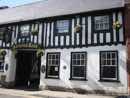
The Saracen's Head was built in 1463 on land gifted in 1396 by Archbishop Thomas Arundel of York, to John and Margaret Fysher. In 1603, James VI of Scotland passed through Southwell on his way to London to be crowned King James I.
During the English Civil War, King Charles I spent his last night as a free man in May 1646, at the Saracen's Head, before surrendering to the Scottish Army stationed at nearby Kelham. The town, the Minster and the Archbishop's Palace suffered under Oliver Cromwell's troops, as they sequestered the palace to stable their horses, broke monuments, ransacked graves for lead and other valuables. By end of the war the Archbishop's Palace was in ruins apart from its Great Hall.
Mary Ann Brailsford was baptised at Southwell in May 1791 and then, Matthew Bramley in 1796 in Balderton.
In 1803, Lord Byron stayed with his mother in Burgage Manor during holidays from Harrow and Cambridge. He had become the 6th Baron Byron of Rochdale, but the family home, Newstead Abbey, was in need of repairs, which they could not afford.
The Bramley cooking apple was first seeded in Southwell, by Mary Ann Brailsford in 1809. Henry Merryweather, a local nurseryman then 17 years old, saw potential and cultivated it from cuttings. The apple is widely used and renowned for its acidic taste and for cooking into a smooth purée.
As the town has an Anglican cathedral, it is sometimes taken as a city and was treated as such in the 1911 Encyclopedia Britannica, but its city status is not recognised by the government.
A roman villa was discovered beneath the Minster and church yard in Southwell in 1959, dating the town back to the roman period. Part of a mural from the excavation is displayed in the Minster. Part of the Fosse Way runs along the bank of the River Trent, with evidence of Roman settlement at Ad Pontem north-west of the village of East Stoke.
The Abbess of Repton, Eadburh, daughter of Ealdwulf of East Anglia, was buried in Southwell's Saxon church. Eadburh was appointed Abbess under the patronage of King Wulfhere of Mercia and is thought to have died about AD 700. Her remains were reinterred in Southwell Minster, then revered there in the Middle Ages.
Geoffrey Plantagenet was ordained a priest at Southwell in 1189. In 1194, Richard I and the King of Scots, William I, were in Southwell, after spending Palm Sunday in Clipstone. King John visited Southwell between 1207 and 1213, ostensibly to hunt in Sherwood Forest, but also on the way to expedition to Wales in 1212.
The Saracen's Head was built in 1463 on land gifted in 1396 by Archbishop Thomas Arundel of York, to John and Margaret Fysher. In 1603, James VI of Scotland passed through Southwell on his way to London to be crowned King James I.
During the English Civil War, King Charles I spent his last night as a free man in May 1646, at the Saracen's Head, before surrendering to the Scottish Army stationed at nearby Kelham. The town, the Minster and the Archbishop's Palace suffered under Oliver Cromwell's troops, as they sequestered the palace to stable their horses, broke monuments, ransacked graves for lead and other valuables. By end of the war the Archbishop's Palace was in ruins apart from its Great Hall.
Mary Ann Brailsford was baptised at Southwell in May 1791 and then, Matthew Bramley in 1796 in Balderton.
In 1803, Lord Byron stayed with his mother in Burgage Manor during holidays from Harrow and Cambridge. He had become the 6th Baron Byron of Rochdale, but the family home, Newstead Abbey, was in need of repairs, which they could not afford.
The Bramley cooking apple was first seeded in Southwell, by Mary Ann Brailsford in 1809. Henry Merryweather, a local nurseryman then 17 years old, saw potential and cultivated it from cuttings. The apple is widely used and renowned for its acidic taste and for cooking into a smooth purée.
As the town has an Anglican cathedral, it is sometimes taken as a city and was treated as such in the 1911 Encyclopedia Britannica, but its city status is not recognised by the government.